
How Concrete Scanning Works: A Guide to GPR & Detection Technology
Whether you're a contractor preparing to core through a suspended slab, an engineer assessing an ageing structure, or a builder managing a tight renovation schedule, knowing what's hidden inside concrete before you start work isn't just useful, it's essential. This guide breaks down how concrete scanning technology actually works, what it detects, and why it matters on every project.
What Is Concrete Scanning?
Concrete scanning is a non-destructive testing method used to identify and map hidden elements within concrete structures, slabs, walls, beams, columns and more. Rather than cutting, coring or drilling blind, scanning lets crews understand exactly what's inside the concrete before any work begins.
The process produces a detailed picture of reinforcement layout, embedded services, voids and other anomalies sitting beneath the surface. It's the difference between working with confidence and working with risk.
At Concrete Scanning & Locating WA, our technicians use industry-leading unground-penetrating radar (GPR) equipment combined with electromagnetic induction technology to deliver precise, same-day results across Perth and all of Western Australia.
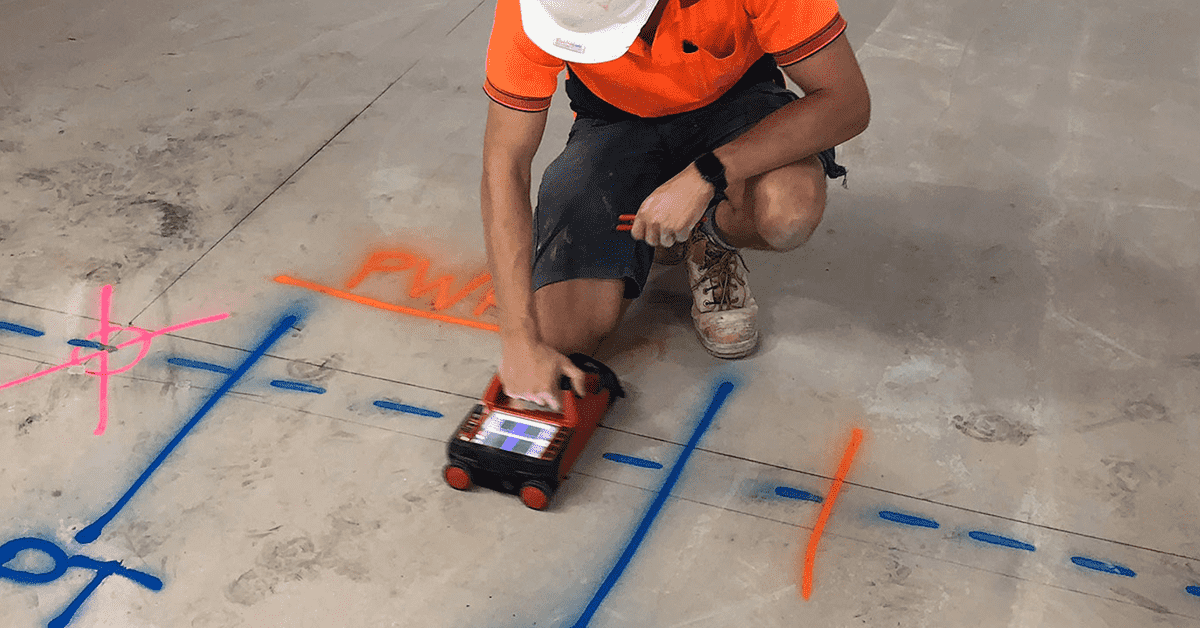
How Ground-Penetrating Radar (GPR) Works
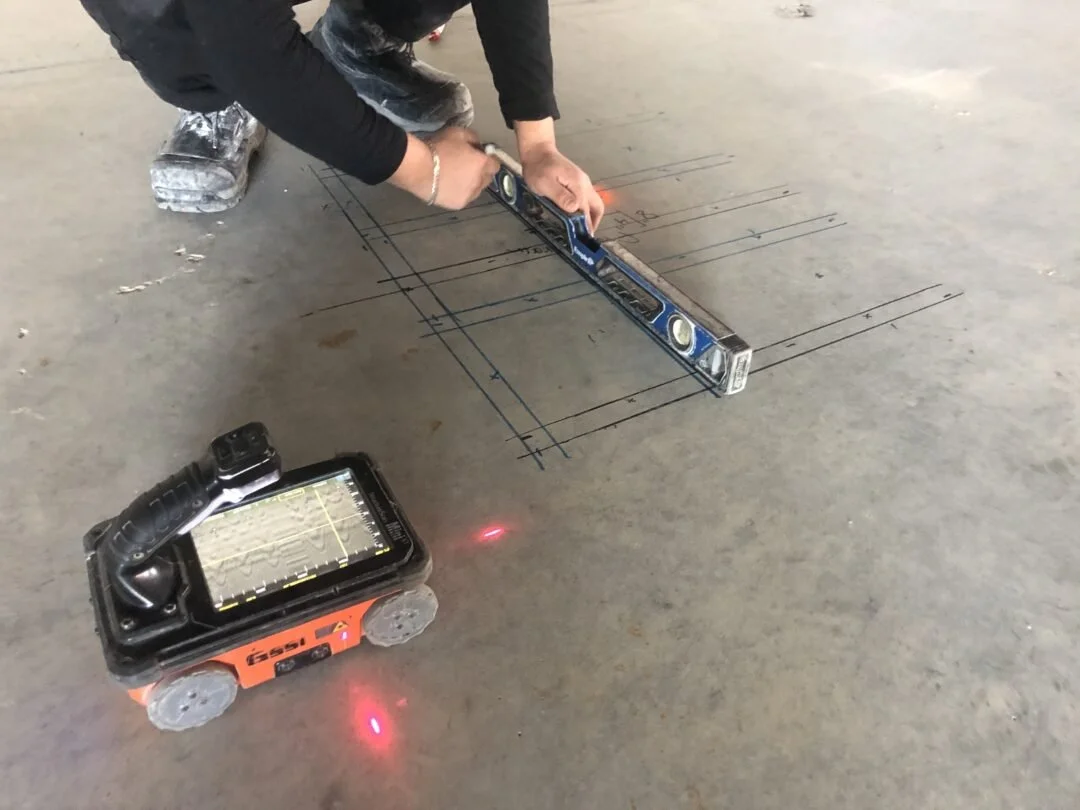
Ground-penetrating radar is the backbone of modern concrete scanning. A GPR unit emits short pulses of high-frequency electromagnetic energy into the concrete through an antenna pressed against the surface. When those pulses encounter an object, rebar, a conduit, a post-tension cable, a void. They reflect back to the antenna at different intensities and travel times.
The equipment records these reflections and processes them into a radargram: a visual cross-section of the concrete showing depth, position and general size of detected objects. An experienced technician interprets this data in real time, identifying what each signal represents and marking safe drill or cut zones on the surface.
GPR can typically penetrate 300–400mm of concrete in good conditions, making it effective for most residential, commercial and civil slab types. It requires no drilling, no chemicals and no disruption to the structure, which is why it's the preferred method on live construction sites and occupied buildings alike.
Electromagnetic Induction: The Complement to GPR
While GPR is highly versatile, electromagnetic (EM) induction technology complements it, particularly for detecting metallic utility lines running beneath or through structures. EM induction works by transmitting a low-frequency signal into the ground or slab and measuring the response from conductive objects like metal pipes and electrical cables.
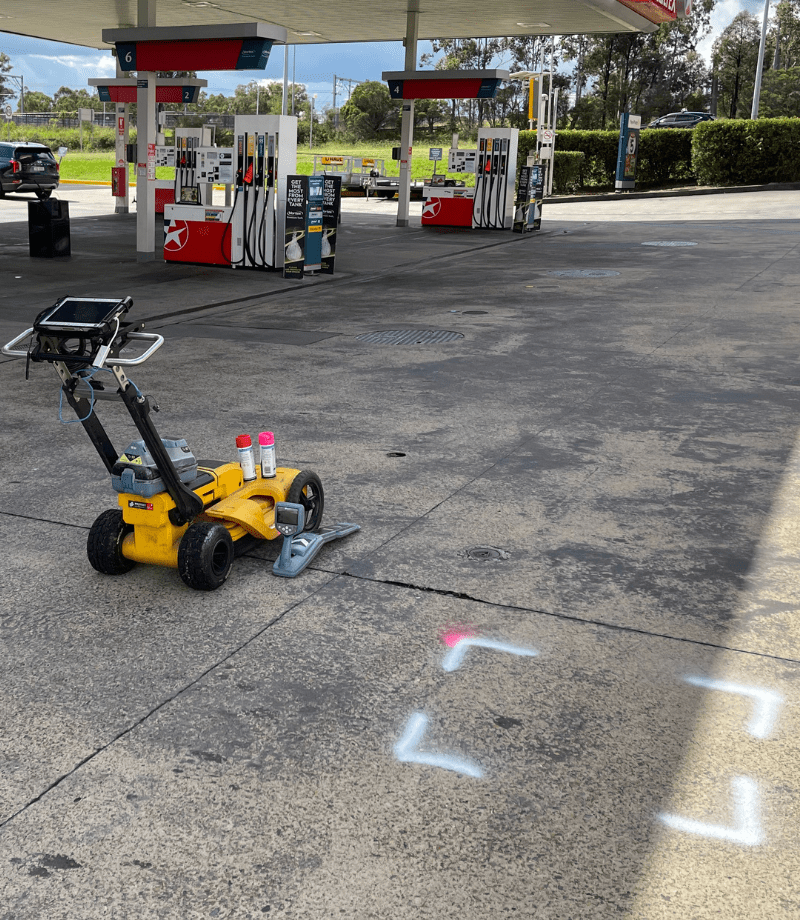
At Concrete Scanning & Locating WA, our team deploys both technologies where required. This dual-technology approach is especially valuable for utility locating, where underground cables and pipelines need to be accurately mapped before excavation or demolition work begins.
Why Two Technologies?
GPR excels at detecting both metallic and non-metallic objects (including plastic conduits, voids and post-tension cables), while electromagnetic induction offers higher sensitivity for actively-conductive metallic utilities. Using both delivers the most complete picture of what's below , reducing blind spots and increasing confidence in the results.
What Can Concrete Scanning Detect?
Modern GPR and EM technology can identify a broad range of embedded and subsurface elements:
Reinforcing steel and wire mesh, including spacing, depth and layout pattern.
Embedded electrical conduit runs, both metallic and non-metallic.
Critical structural strands that must never be cut, often with irregular routing patterns.
Water and drainage lines running within or beneath slabs.
Air pockets, delamination or other internal inconsistencies that may affect structural integrity.
Precise depth measurements for planning core depths and anchor lengths.
Our concrete scanning service covers all of these elements, giving your team the data needed to plan confidently and work safely. For underground utilities specifically, our utility locating service extends that capability to cables, pipes and services running beneath the ground surface.
The Scanning Process: Step by Step
Here's what a typical concrete scanning engagement looks like from start to finish:
-
Site Assessment
Our technician reviews the site, discusses the scope of works and identifies key areas requiring scanning, slab sections, walls, columns or ground zones.
-
Equipment Setup
GPR antennas and EM equipment are configured for the conditions, concrete type, surface finish, required depth penetration and job requirements.
-
Scanning
The antenna is systematically passed over the scan zone in a grid pattern. Data is captured in real time and reviewed on screen as the scan progresses.
-
Data Interpretation
Our experienced operators analyse the radargram and EM results, identifying embedded objects, their depth and any potential hazards or areas of concern.
-
On-Site Mark-Up
Safe drill, cut or core locations are physically marked on the surface using paint or chalk, so your team can proceed directly and accurately.
-
Same-Day Reporting
A documented scan report is provided on the day, summarising findings and flagging any identified hazards, ready for your project records.
Why Scanning Matters: The Real Risks of Scanning Blind
Cutting or drilling into concrete without scanning first carries serious consequences. Striking a post-tension cable, one of the most common risks on suspended slabs, can compromise the structural integrity of an entire floor, with repair costs potentially running into the tens of thousands of dollars. Hitting a live electrical conduit presents a direct risk to life on site.
Beyond safety, there are regulatory and commercial considerations. Building codes in Western Australia increasingly require documented evidence that scanning was completed before significant concrete modifications. Insurance claims can be complicated or rejected where due diligence isn't demonstrated.
The cost of a professional concrete scan is a fraction of the cost of repairs, project delays, or the legal and safety implications of a service strike. It's also one of the few preventative measures that genuinely delivers peace of mind. You know what's there, and you know where to cut.
Ready to Scan Before You Start?
Working with an experienced scanning team means you go into every cut, drill or excavation with full knowledge of what's below. At Concrete Scanning & Locating WA, we operate seven days a week, 6am to 6pm, and we do our best to get on site the same day you call.
Explore our services or get in touch for a fast quote: